If you’re looking for a place where the raw power of a volcano is still written across the landscape, the Devastated Area at Lassen Volcanic National Park is one of the most compelling stops in all of northern California. The 3-square-mile stretch on the eastern slope of Lassen Peak is not just a scenic overlook. It’s a living record of one of the most significant volcanic events in American history, where the earth literally rearranged itself. Whether you’re a geology buff, a history lover, or just someone who wants to see something truly extraordinary, the Devastated Area delivers a perspective on nature’s force that’s hard to find anywhere else in the lower 48.
When you’re planning what to do in the region, there’s no shortage of remarkable experiences in and around Lassen Volcanic National Park. You can hike past steaming fumaroles and boiling mud pots at Bumpass Hell, summit Lassen Peak itself on a clear summer day, or explore the pristine backcountry lakes that dot the park’s interior. The area surrounding the park also offers excellent fishing, horseback riding, and some of the darkest night skies you’ll find in the western United States.
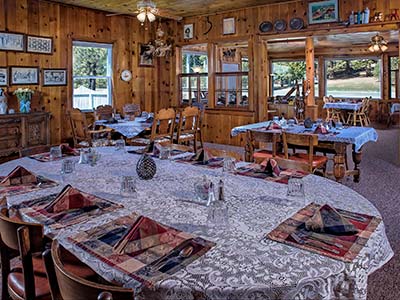
After a full day of exploring, what you really want is a real bed, a hot shower, and a home-cooked meal. Located just minutes from the park, our rustic European-style lodging offers exactly that. Our Mineral California Hotel sits on expansive acreage complete with horse corrals, an on-site restaurant and tavern, and the kind of warm hospitality. Book your stay today!
The Devastated Area: Where the Mountain Told Its Story
The Devastated Area gets its name honestly. What you’re looking at today is the aftermath of a series of volcanic events that unfolded between 1914 and 1916, ending a 27,000-year period of dormancy for Lassen Peak. It started relatively quietly in May 1914 with steam venting from the summit, the kind of thing that gets a geologist’s attention but doesn’t make headlines. Then on May 14, 1915, lava erupted from the crater and spilled down the mountainside, traveling several miles.
The real drama came five days later, on May 19, when the lava dome collapsed. Three days after that, on May 22, a violent eruption sent a column of ash and debris shooting skyward, visible from Eureka, 150 miles to the west. Ash was reported as far away as Nevada. The hot pyroclastic flow and accompanying mudflow swept down the eastern slope, stripping the landscape bare for miles and turning everything in its path into what would come to be known as the Devastated Area.
What makes this history even more remarkable is that, despite the eruption’s ferocity, there were no fatalities. The area’s remote location in northern California meant that very few people were close enough to be in danger, a lucky circumstance that allowed scientists and curious visitors to study the aftermath in relative peace.
Lassen Peak and Mount St. Helens remain the only two volcanoes in the contiguous United States to have erupted in the 20th century, which gives the Devastated Area a kind of historical weight that’s rare to experience firsthand. When you stand there and look out at the rocky, largely treeless expanse, you’re looking at the same terrain those early observers walked through in stunned silence over a hundred years ago.
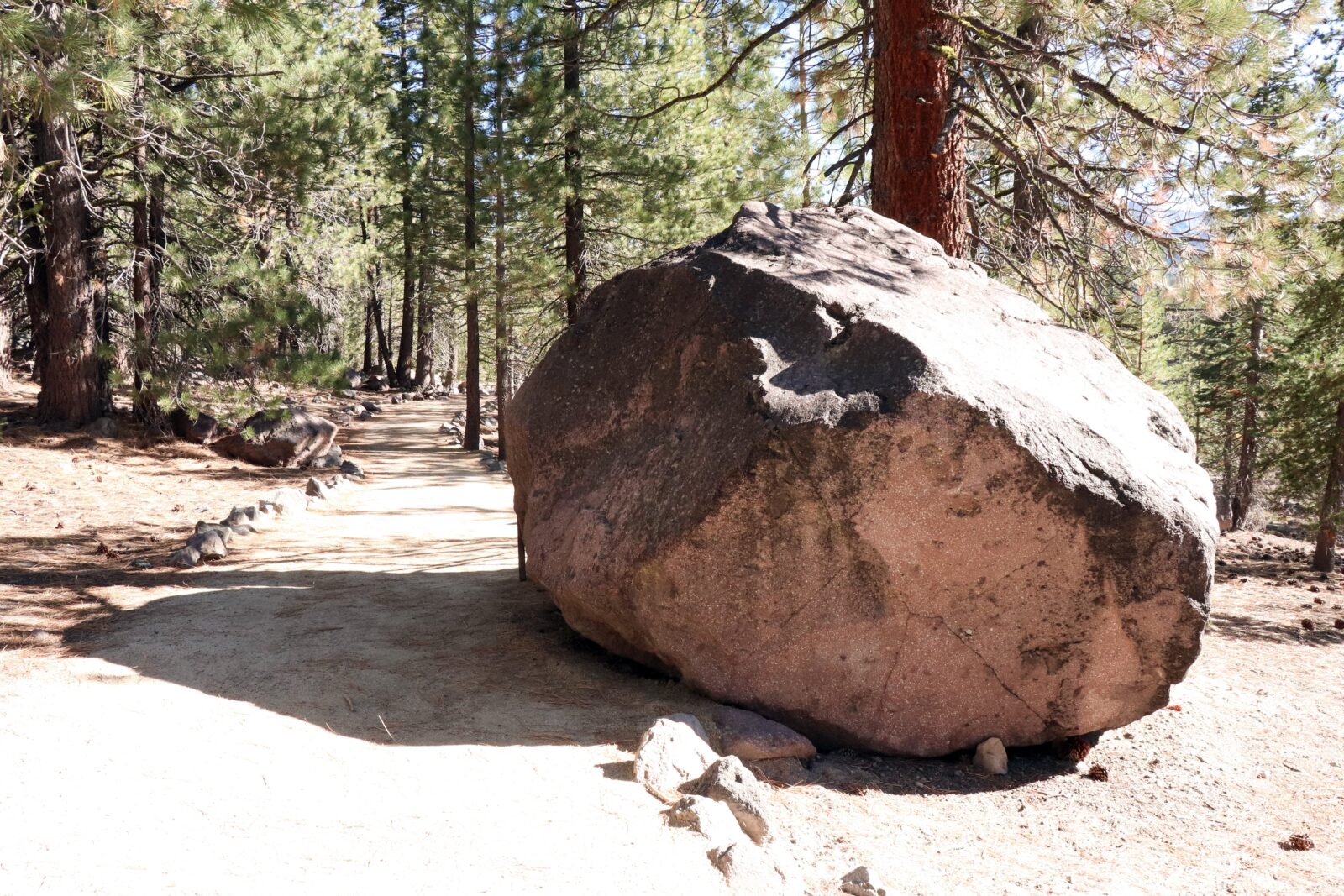
One of the most tangible reminders of the eruption’s violence is Hot Rock, a boulder roughly the size of a van that was hurled from the volcano and came to rest near the base of the eastern slope. The sheer scale of it gives you an immediate, visceral sense of what the eruption unleashed. Seeing it in person is one of those moments where geology stops being abstract and becomes something you feel in your gut. If you’re visiting the Devastated Area with kids, Hot Rock alone tends to prompt a dozen questions.
The Devastated Area is also fascinating from a botanical standpoint. Even after more than a century, the area still struggles to support significant tree growth. The volcanic debris that blankets the ground doesn’t retain water well, making it extremely difficult for established forests to take hold. You’ll see pioneer species, a scattering of young conifers, and plenty of open rocky ground, but the dense forest that characterizes most of the Sierra Nevada and southern Cascades is largely absent here. That openness is part of what makes the view of Lassen Peak from the Devastated Area so dramatic.
The Devastated Area Interpretive Trail is the best way to take all of this in. It’s a flat, accessible loop trail well-suited for most visitors, including families with young children or anyone not looking for a strenuous hike. Historic photographs and written accounts are incorporated into the trail exhibits, letting you hold up the past against the present and see exactly how much, and how little, has changed.
The trail tells the story of the 1915 to 1916 eruption in a way that feels immediate and personal, not like a textbook summary. If you’re approaching from the southwest entrance of the park, the Devastated Area is about 19 miles in. From the northwest entrance, it’s closer, around 10 miles. Either way, it’s worth making a dedicated stop rather than treating it as a drive-by.
The Best Mineral California Hotels near Lassen
Our property’s European character and generous acreage make it feel less like an accommodation and more like a destination in itself. When you’re not on the trail, you can relax on the grounds, enjoy a drink at the tavern, or simply take in the mountain air somewhere quiet and unhurried.
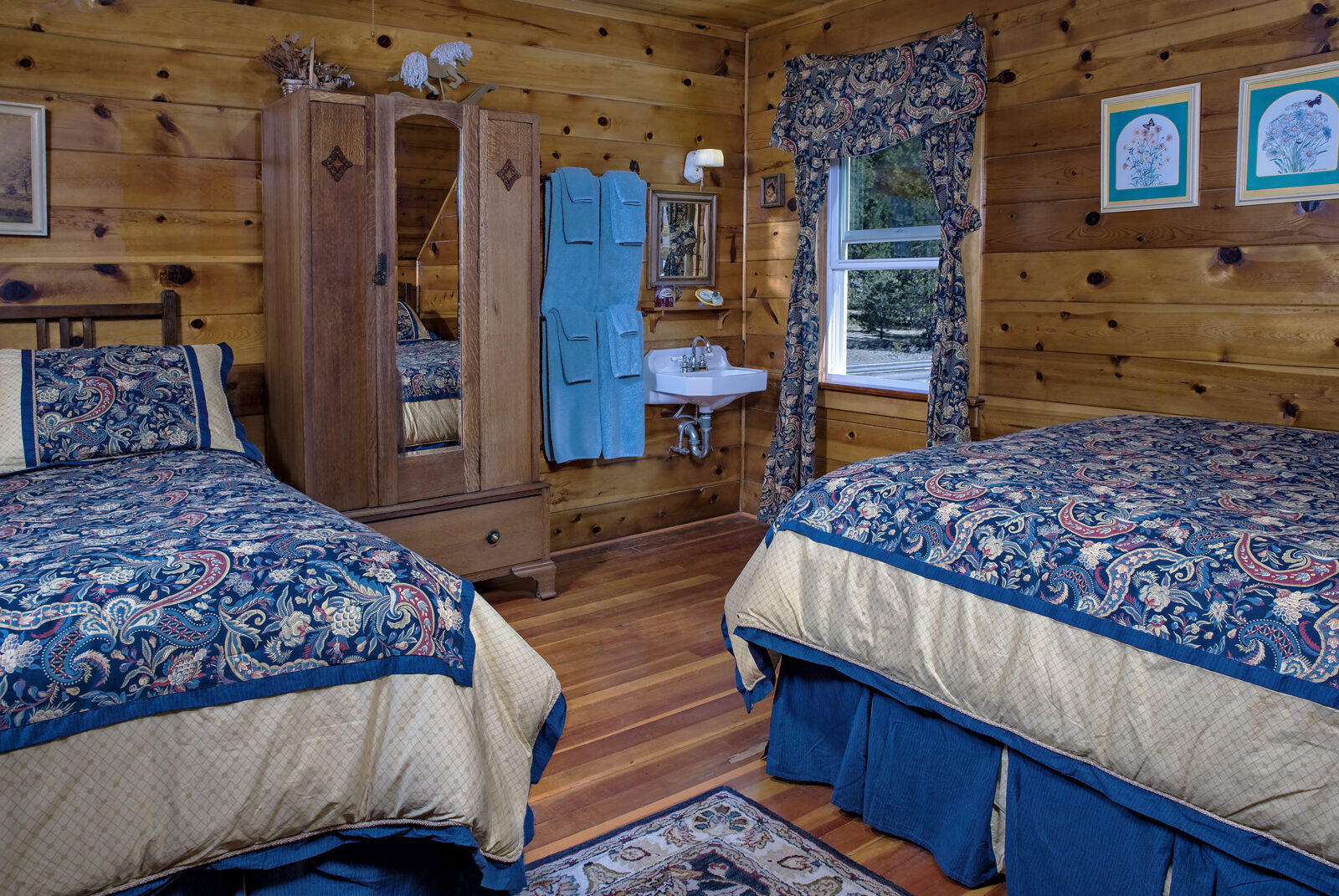
As far as Mineral CA hotels go, the lodge stands apart for what it prioritizes: real hospitality, home-cooked meals, and the kind of comfort that restores you for the next day’s adventure. After hiking to Hot Rock, walking the Devastated Area Interpretive Trail, and doing all the things to do in Lassen National Park, coming back to a warm meal prepared on-site and a real bed in a real room makes a meaningful difference. If you’re planning a trip to Lassen Volcanic National Park this summer, our Mineral CA Hotel is a convenient and cozy place to stay. Reserve your stay now!