Lassen Peak Trail is often considered one of the best hikes in Lassen National Park, and it earns that reputation the moment the climb begins. This iconic route to the summit offers a rare opportunity to walk up an active volcano, with every switchback revealing stunning views of Northern California’s rugged landscape. As you gain elevation, forests give way to open slopes of volcanic rock, creating a dramatic contrast that feels almost otherworldly. Reaching the top delivers a clear, panoramic view of Mt. Lassen and the surrounding wilderness, making this one of the most rewarding summits in the region.
If a strenuous summit climb like the Lassen Peak Trail isn’t on your agenda, there are countless other things to do in Lassen Volcanic National Park worth exploring for more than just a day. Visitors can wander through hydrothermal areas like Bumpass Hell, where bubbling mud pots and steaming vents showcase the park’s remarkable geothermal energy. Alpine lakes such as Manzanita Lake offer calm waters for kayaking and scenic spots for picnics, while unexpected wildlife sightings add an element of surprise to any outing. Whether you prefer quiet forest walks or more challenging terrain, the variety here makes it easy to build a full and satisfying itinerary.
For those looking to experience it all with more comfort than a campsite can offer, St. Bernard Lodge is one of the top Hotels near Lassen National Park. Set on open acreage with horse corrals and welcoming gathering spaces, the property blends rustic charm with genuine comfort. After a day on the Lassen Peak Trail, guests return to a warm meal at the on-site restaurant, exactly the kind of ending a big day in the park deserves. Book your stay today!
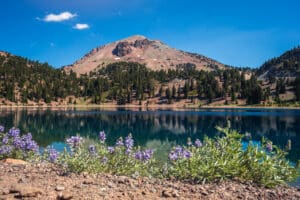
What You Need to Know About the Lassen Peak Trail
The Lassen Peak Trail is a 5-mile round-trip hike that climbs roughly 2,000 feet to the summit of one of the largest plug dome volcanoes in the world. The trailhead already sits well above sea level, but the steady incline quickly reminds you that this is a true summit hike. The path is well-maintained and easy to follow, with gradual switchbacks that help manage the elevation gain. As you climb, the landscape shifts from pine forest to exposed volcanic slopes, a vivid reminder of the geological forces shaping this corner of Northern California.
The views become especially dramatic as you gain elevation. With very little tree cover for much of the route, the scenery opens up around you in all directions. On a clear day, you can see across a vast stretch of Northern California, including nearby peaks and alpine lakes that look almost miniature from above.
The Lassen Peak Trail also offers a chance to observe the unique plants and wildlife that thrive in a high-elevation volcanic environment. The lower sections pass through a subalpine forest of whitebark pine and mountain hemlock — hardy species that grow in twisted, wind-shaped forms reflecting long winters and short growing seasons. In late summer, wildflowers such as lupine, paintbrush, and alpine asters add bursts of color along the path.
As you climb higher on the Lassen Peak Trail, vegetation becomes sparser. Volcanic rock and ash dominate the upper slopes, where only low-growing shrubs, mosses, and lichens manage to take hold, slowly breaking down the rock over time. Wildlife is more subtle here than at lower elevations, but not absent. Yellow-bellied marmots are often seen sunning themselves on rocks, pikas call out from the boulder fields, and Clark’s nutcrackers are a common sight throughout the climb. Starting early or finishing late also increases your chances of spotting mule deer in the lower forest sections.
Because this is a sensitive alpine ecosystem, staying on the established trail and avoiding disturbance to plants or wildlife is essential. Even minor impacts can take years to recover from. Snow can linger well into early summer on the Lassen Peak Trail, and summit weather can shift quickly. Starting early keeps temperatures cooler and crowds more manageable. Bring layers, plenty of water, and solid sun protection; shade is limited for most of the route.
Here are five other Lassen Volcanic National Park hiking trails to round out your trip:
- Hike the Bumpass Hell Trail, which leads to the park’s largest hydrothermal area, where boardwalks wind through steaming vents and bubbling mud pots. Go early; parking fills up quickly, and midday heat can make the exposed sections intense.
- The Kings Creek Falls Trail is a great choice for a scenic outing without committing to a full-day summit climb. The route passes through meadows and forest before arriving at a beautiful waterfall, with only a short staircase section near the end.
- The Manzanita Lake Loop is ideal for a relaxed outing. On calm days, the reflection of Mt. Lassen across the lake is one of the park’s most photographed scenes and makes for a lovely evening walk.
- The Cinder Cone Trail crosses a lava field before climbing a loose cinder slope to the top of the cone. The views into the crater and across the Painted Dunes are well worth the effort; just wear sturdy shoes.
- The Terrace, Shadow, and Cliff Lakes Trail strings together a series of small alpine lakes through quiet forest. It is a great option for avoiding crowds, and the peaceful lakeside setting is perfect for a picnic.

The Best of Hotels Near Lassen National Park
After a full day on the Lassen Peak Trail, having a comfortable place to land makes all the difference. Our lodge is one of the most welcoming Hotels near Lassen National Park, offering hot showers, a real bed, and plenty of room to decompress after a long day on the trail. The on-site restaurant means you can sit down to a home-cooked meal without any extra planning or driving. With open acreage, horse stables, and a genuinely relaxed atmosphere, it is the kind of place where the day ends just as well as it began. Reserve your room now!